Field notes · Taste & Culture · At the Table
Beyond Pad Thai: A More Curious Guide to Southern Thai Food on Samui
An introduction to southern Thai cooking, from turmeric and sour curry to the vegetables that belong beside the rice.
The Gazette Desk7 November 20263 min
Pad Thai needs no defence. It is a perfectly reasonable lunch. But a stay on Samui offers a reason to widen the order, especially towards the cooking of southern Thailand.
The useful starting point is geography, not a contest over authenticity. Southern Thailand occupies a peninsula shaped by the sea and longstanding trading connections. The Thailand Foundation describes a cuisine influenced by Chinese, Indian and maritime Southeast Asian traditions, with seafood, strong aromas, chillies and accompanying vegetables among its defining features.
That gives a visitor more to work with than the familiar instruction to order something spicy.
Start with the curry, not the colour chart
Khua kling is a useful introduction. This dry curry brings meat and curry paste together without the generous sauce that many visitors associate with Thai curries. Think of it as something to eat with rice and other food rather than a bowl to tackle alone. A small amount can carry considerable flavour. Ask which meat is used and how much chilli the kitchen can reasonably adjust.
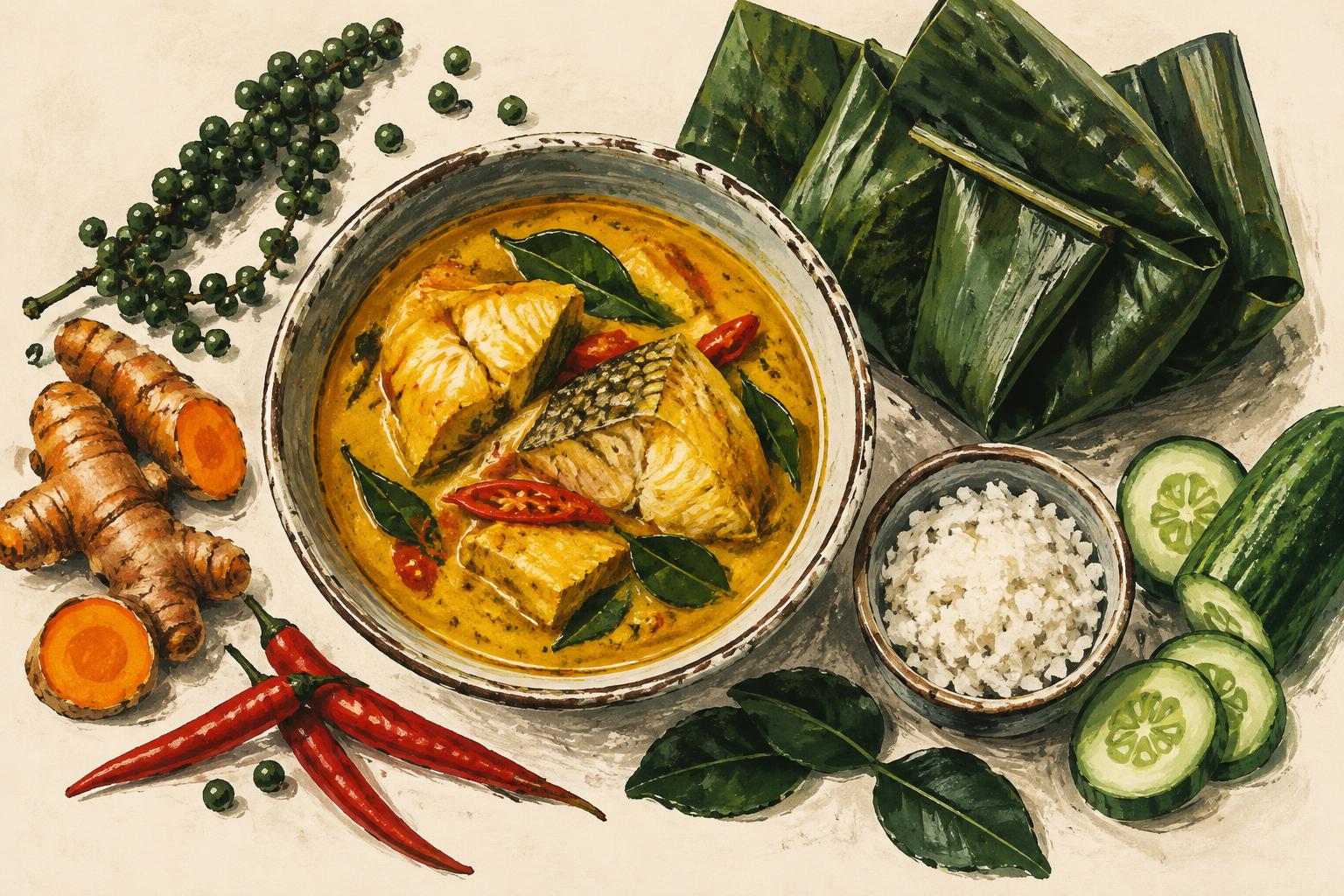
Gaeng lueng offers a different direction. The Tourism Authority of Thailand describes a yellow curry made with turmeric, with a pronounced sour and spicy character. Fish and bamboo shoots are among the ingredients it lists. This is not necessarily the mild, creamy yellow curry a visitor may have in mind.
The name alone is therefore not enough. Ask what is in the pot.
There is more than heat
Turmeric is a useful thread to follow. The tourism authority identifies it as a frequent ingredient in southern dishes. Its guide includes gai tom khamin, a chicken soup with turmeric, and bai liang leaves cooked with egg.
These are reminders that a regional meal need not become an endurance exercise. Instead of asking for every dish to be made equally mild, ask which dishes are naturally gentler. Changing the chilli in an already prepared curry may not be possible; choosing another dish often is.
For a more assertive flavour, there is gaeng tai pla. The Thailand Foundation lists this fish gut curry among the region's recognised dishes. It deserves a clear explanation when ordering, particularly for anyone unfamiliar with the ingredient. There is no obligation to like everything on a first encounter.
Order a meal rather than a challenge
For two people, try rice, one curry, a vegetable dish and something the kitchen recommends as a contrast. Tell the person taking the order about allergies before choosing. Ask specifically about fish sauce, shrimp paste and other seafood ingredients rather than assuming a vegetable dish contains none.
Fresh vegetables are not an incidental flourish. The Thailand Foundation describes heaps of vegetables as a typical accompaniment. Give them a place in the meal instead of leaving them untouched beside the stronger dishes.
Nor should every southern dish be presented as uniquely Samui's. Regional cooking travels, recipes vary, and a restaurant menu is not a complete account of an island's food. This is an introduction to a regional vocabulary, not a restaurant review or a claim that every kitchen serves these dishes.
The most useful question is modest: what southern dishes does this kitchen cook? Follow it with another: what would go well beside them?
That leaves room for the cook's knowledge, your appetite and the possibility of finding a new favourite. Pad Thai will still be there tomorrow.