Feature · Inside the House
The House That Began as a Concrete Shell
Before STRATA had a café, offices or members, it was a building with a difficult question attached: what could this place become?
Philemon Dedeur7 November 20262 min
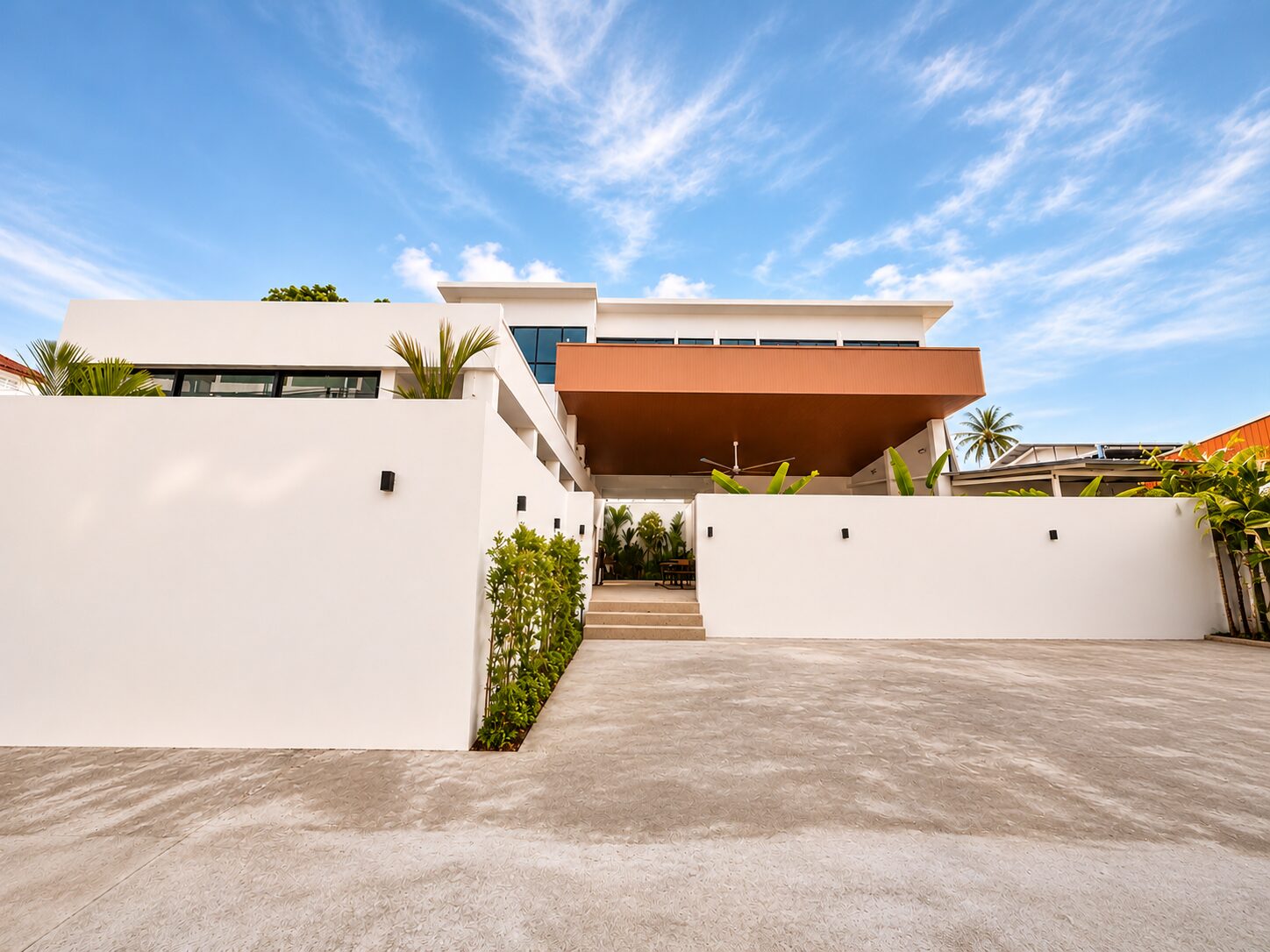
A building can be useful long before it is beautiful. Patra Building, on the Bo Phut ring road opposite Big C, had a practical address and generous proportions. It lacked the easy elegance of a finished hospitality space. Transforming it into STRATA House involved more than putting furniture into a rented property. It meant deciding what kinds of daily life could coexist under one roof.
Opening the House
STRATA House is operational in soft opening. Visitors are welcome now, while finishing touches continue. We are not billing yet; billing begins on 11 November 2026. Across approximately 1,200 square metres on three levels, the House brings together coworking, private offices, a café, an evolving restaurant, a shared kitchen, a drinks laboratory, meeting spaces, creative work and an emerging cultural programme. Some parts operate now; others will follow as they are ready. That distinction matters to the story.
No single use defines the whole building. A café customer might stay for a few minutes. An office resident could spend years here. A team may need a quiet room, while a chef needs the kitchen. An artist might need a wall large enough for new work. Making those lives coexist requires attention to circulation, acoustic boundaries, hours, hospitality and respect. Calling a building a community does not resolve those questions.
Rooms and layers
The design follows this idea of layers. Open public spaces sit alongside places that require membership or permission. Behind the visible rooms are less photogenic necessities: electrical systems, kitchen extraction, plumbing, weatherproofing, storage and operational routines. Tropical buildings ask hard questions of anyone who renovates them. Rain will test the roof before a photograph ever tests the finishes.
The House’s name is a clue. Strata are layers of material, deposited over time, with a history visible in the section. Here, the layers are social as much as architectural: work, food, conversations, art and ordinary routines. A good building allows useful crossings between them while protecting the space each needs.
Reasons to return
There is also a larger question about place. Samui has no shortage of venues designed to attract a first visit. The more difficult ambition is to create a reason to return on an unremarkable Tuesday. STRATA’s answer centres on a rhythm: coffee in the morning, focused work through the day, a chance encounter on the stairs, and eventually dinner and culture after dark. The timetable is still developing. The underlying idea is already testable.
An image of the unfinished shell, with practical decisions still visible behind the new surfaces, may prove more revealing in a future photographic record than the finished reception desk. Telling the story properly requires both views, along with the people who carried the project from one to the other.